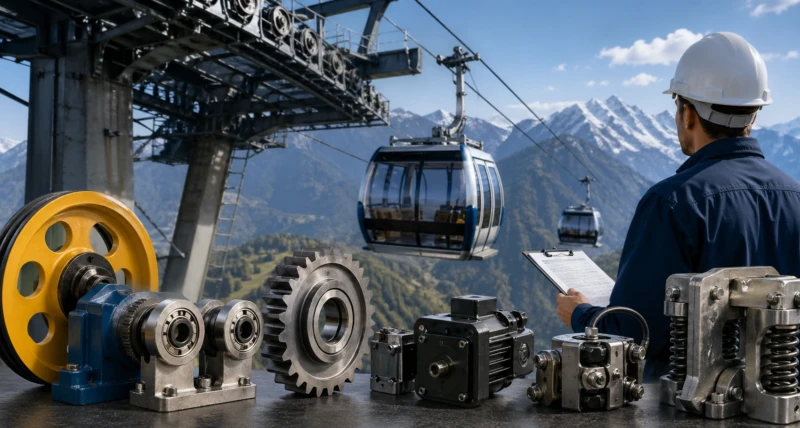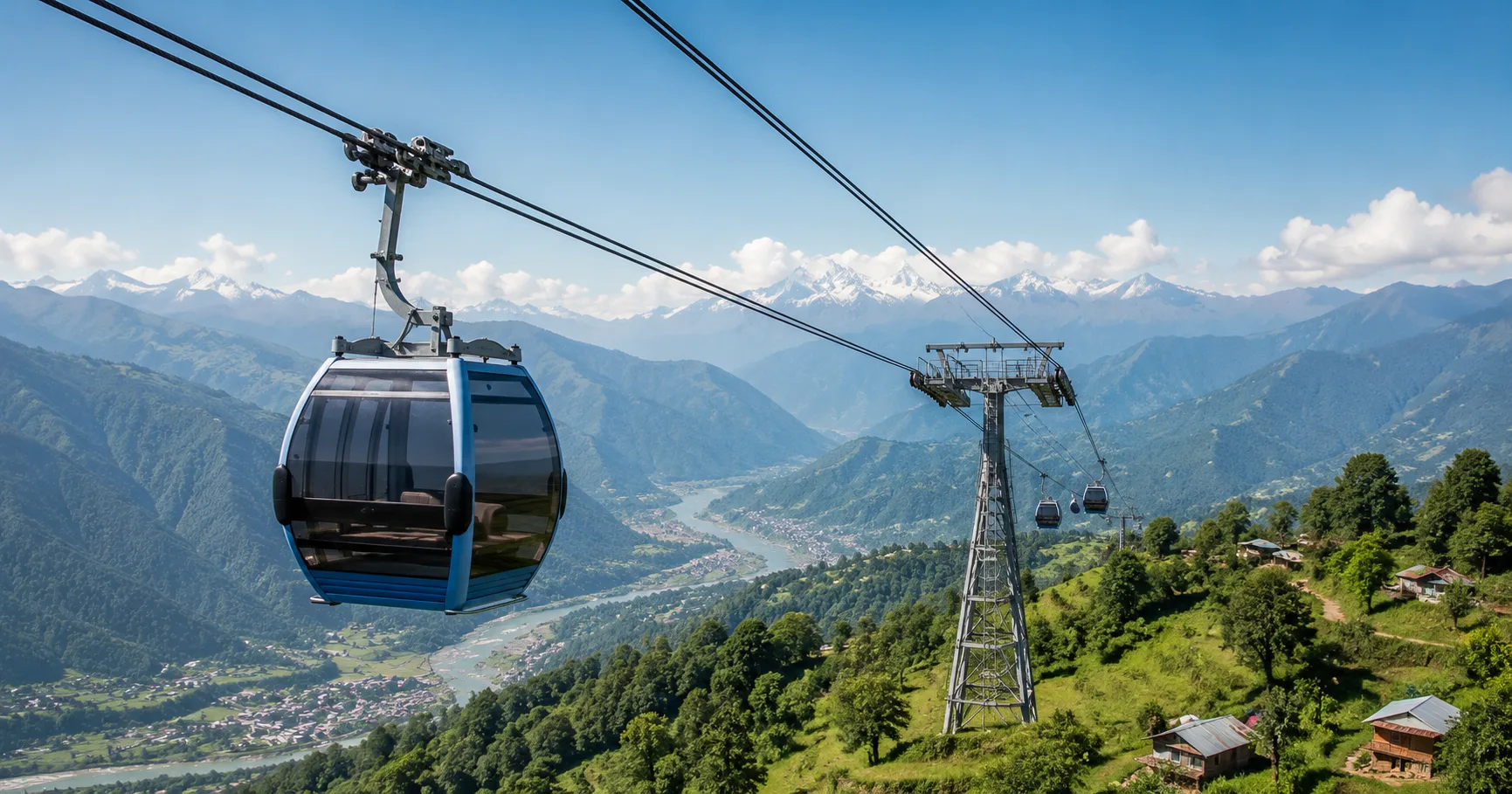
Mountainous regions often face significant transportation challenges due to steep gradients, rugged terrain, dense forests, and unpredictable weather. Constructing conventional roads or railway networks in such landscapes is expensive, environmentally demanding, and time-consuming. This is where Bicable Ropeway Systems have emerged as one of the most efficient transportation solutions. Designed to operate safely over difficult terrain, these ropeway systems provide reliable passenger and cargo movement while minimizing environmental disruption.
Whether connecting remote villages, boosting tourism, or improving urban mobility in mountain towns, modern ropeway technology has transformed transportation in high-altitude regions. In this article, we’ll explore why bicable systems are considered the preferred solution for mountainous landscapes and how they outperform conventional alternatives.
Understanding Bicable Ropeway Systems
Bicable Ropeway Systems utilize two separate cables for operation. One fixed track rope supports the cabin’s weight, while a second moving haul rope propels the cabins along the route. This dual-cable design offers superior stability, greater load-bearing capacity, and smoother operation compared to monocable systems.
The engineering behind these systems allows them to span long distances with fewer towers, making them ideal for valleys, rivers, cliffs, and densely forested mountain regions. Their robust construction enables safe operation even in demanding geographical conditions.
Common applications include:
- Passenger transportation in mountain destinations
- Tourism and sightseeing projects
- Public transit across difficult terrain
- Cargo transportation to remote settlements
- Religious pilgrimage routes
Why Bicable Ropeway Systems Perform Better in Mountainous Terrain
Mountain landscapes demand transportation systems that can overcome natural obstacles without extensive land modification. Bicable Ropeway Systems excel because they combine advanced engineering with exceptional operational stability.
Unlike conventional transport infrastructure, ropeways require minimal ground intervention. Cabins travel above rivers, forests, rocky slopes, and valleys without disturbing the surrounding ecosystem. This makes them highly suitable for environmentally sensitive regions.
The dual-cable mechanism also ensures reduced cabin sway, providing passengers with a safer and more comfortable journey even during challenging weather conditions.
Key Benefits of Bicable Ropeway Systems
The growing popularity of mountain ropeways is largely driven by the numerous Benefits of Bicable Ropeway Systems for governments, tourism developers, and local communities.
Some of the most significant advantages include:
- Excellent stability in windy environments
- High passenger carrying capacity
- Lower environmental impact than road construction
- Reduced travel time across mountains
- Long operational lifespan with proper maintenance
These Benefits of Bicable Ropeway Systems make them a sustainable investment for regions seeking reliable transportation without damaging natural landscapes.
Bicable Ropeway for Hilly Regions Ensures Superior Stability
One of the biggest concerns in mountain transportation is maintaining stability under varying weather conditions. A Bicable Ropeway for Hilly Regions addresses this challenge through its dual-cable configuration.
Because the cabins rest on a stationary support rope while being pulled independently by the haul rope, movement remains smooth even on long spans. This significantly reduces swinging compared to single-cable systems.
A Bicable Ropeway for Hilly Regions also allows operators to cross deep valleys and steep cliffs without constructing multiple support structures, making installation more practical in inaccessible locations.
Advantages of Bicable Ropeway Over Conventional Transportation
Traditional road construction in mountainous areas often involves extensive excavation, blasting, retaining walls, and continuous maintenance due to landslides and erosion.
Some major Advantages of Bicable Ropeway include:
- Minimal land acquisition
- Faster project implementation
- Lower long-term maintenance costs
- Safe transportation over difficult terrain
- Reduced traffic congestion
Another important Advantages of Bicable Ropeway is its ability to function throughout the year with consistent operational efficiency, even where roads are frequently blocked by snowfall or landslides.
Ropeway Transportation in Mountain Areas Supports Sustainable Development
Modern infrastructure projects increasingly focus on balancing development with environmental conservation. Ropeway Transportation in Mountain Areas aligns perfectly with this objective.
Since only towers and stations require ground construction, forests, wildlife habitats, and natural water systems remain largely undisturbed. This significantly reduces the ecological footprint compared to highway expansion.
Additionally, Ropeway Transportation in Mountain Areas decreases dependence on fuel-powered vehicles, helping reduce carbon emissions and air pollution while encouraging greener tourism.
For destinations focused on eco-tourism, ropeways provide visitors with scenic travel experiences without harming the surrounding ecosystem.
Explore More:- Best ropeway manufacturer in India | Ropeway Electro-Mechanical Parts Supplier | Funicular System manufacturers in india
How Bicable Aerial Ropeway Technology Improves Safety
Passenger safety remains one of the primary reasons governments and developers prefer Bicable Aerial Ropeway Technology.
Modern ropeway systems integrate advanced engineering features such as:
- Automatic braking systems
- Continuous cable monitoring
- Wind speed detection
- Emergency backup drives
- Real-time operational monitoring
These innovations allow Bicable Aerial Ropeway Technology to maintain high safety standards even in challenging mountain environments.
Routine inspections, preventive maintenance, and international engineering standards further enhance operational reliability throughout the system’s lifespan.
Tourism Growth Through Bicable Ropeway Systems
Mountain destinations thrive on accessibility. Improved transportation directly increases visitor numbers, boosts local businesses, and creates employment opportunities.
Bicable Ropeway Systems make scenic viewpoints, pilgrimage centers, adventure parks, and remote attractions easily accessible for families, senior citizens, and travelers who may otherwise struggle with steep climbs.
Businesses operating within the tourism and adventure sector, including organizations like Aarmageddon Adventures, benefit from improved visitor connectivity, enabling tourists to explore destinations comfortably while enjoying breathtaking panoramic views.
The ability to provide year-round transportation also helps stabilize tourism revenue beyond seasonal travel periods.
Future of Mountain Transportation
Urban planners and infrastructure developers increasingly recognize ropeways as an integral part of future transportation planning. As technology continues to advance, ropeway systems are becoming faster, more energy-efficient, and capable of transporting larger passenger volumes.
Integration with public transportation networks, renewable energy sources, smart monitoring systems, and automated operations will further strengthen their role in sustainable mobility.
For mountainous regions where traditional infrastructure remains challenging, bicable ropeways offer an ideal balance between engineering efficiency, passenger comfort, environmental responsibility, and long-term economic value.
Conclusion
As transportation demands continue to grow in mountainous landscapes, Bicable Ropeway Systems provide a practical, safe, and environmentally responsible solution. Their exceptional stability, high carrying capacity, reduced environmental impact, and long operational life make them particularly suitable for regions where roads and railways are difficult to construct.
From enhancing tourism and improving rural connectivity to supporting sustainable development, these systems deliver long-term benefits that extend far beyond transportation. With continuous advancements in engineering and safety standards, bicable ropeways are expected to play an increasingly important role in shaping the future of mountain mobility worldwide.
Frequently Asked Questions
1. Why are Bicable Ropeway Systems suitable for mountainous regions?
They offer superior stability, high passenger capacity, and safe transportation across steep and challenging terrain.
2. What is the main advantage of a bicable ropeway?
Its dual-cable design provides better stability, smoother operation, and greater load-bearing capacity.
3. Are bicable ropeways environmentally friendly?
Yes. They require minimal land disturbance and produce significantly lower environmental impact than road construction.
4. Can bicable ropeways operate during windy conditions?
Yes. Their dual-cable configuration offers better resistance to wind, making them more stable than many other ropeway systems.
5. Where are bicable ropeway systems commonly used?
They are widely used in mountain tourism, public transportation, pilgrimage routes, ski resorts, and remote rural connectivity projects.