


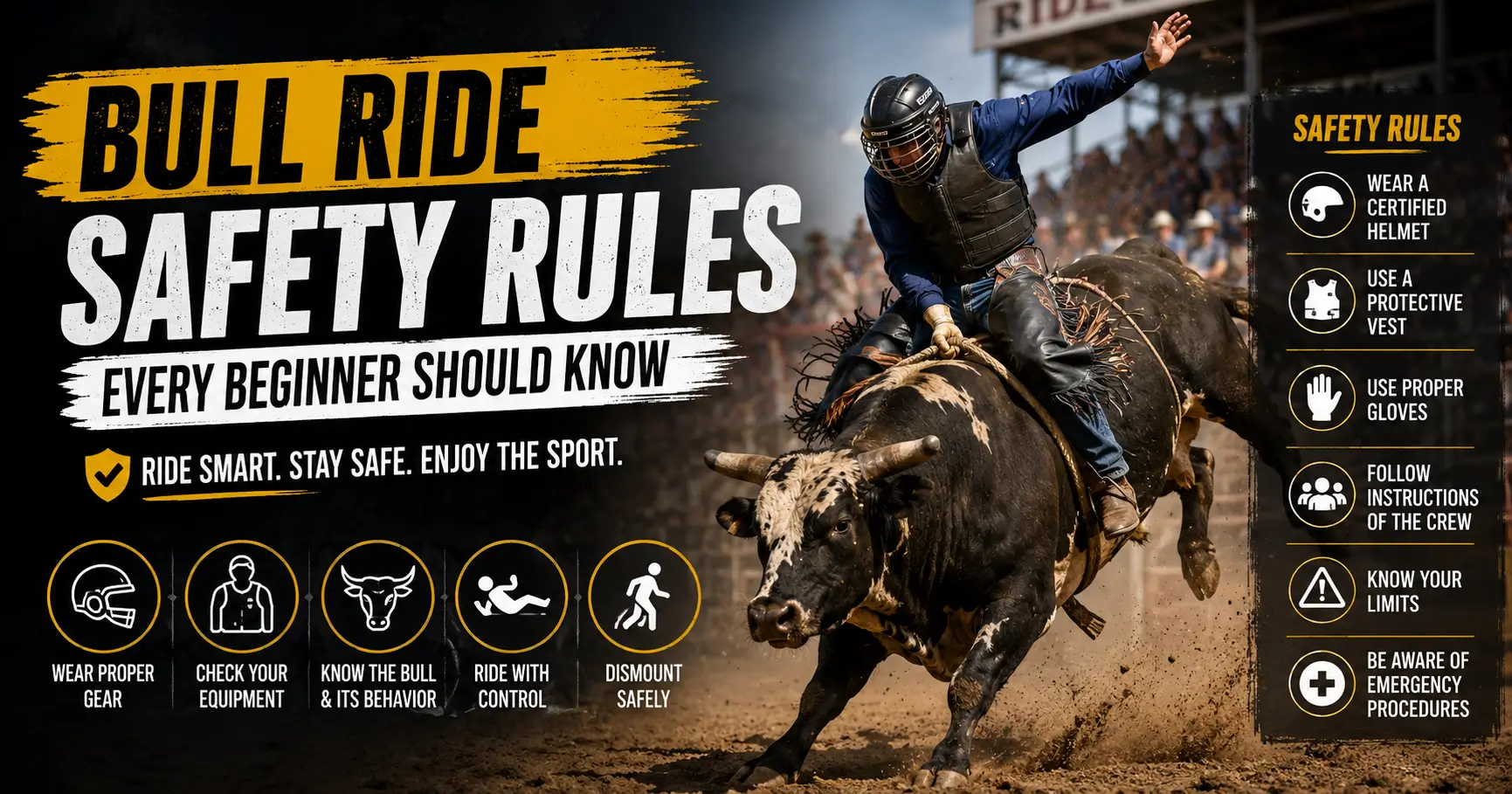
Bull riding is one of the most thrilling and physically demanding rodeo sports in the world. The excitement of staying balanced on a powerful bull attracts thousands of adventure enthusiasts every year. However, before stepping into the arena, understanding Bull Ride Safety Rules is far more important than focusing on performance. Every beginner should know that bull riding is a high-risk activity where proper preparation, training, and safety awareness can significantly reduce the chances of injury.
Whether you’re attending your first rodeo school or preparing for a recreational ride, following proven safety practices will help you build confidence while protecting yourself. This guide covers everything from essential riding techniques to equipment and expert recommendations that every new rider should know.
Why Safety Matters Before You Ride
Unlike many other adventure sports, bull riding involves working with a powerful animal weighing well over 1,000 pounds. Bulls react unpredictably, making it impossible to control every movement during a ride.
For beginners, the goal should never be to stay on the bull at all costs. Instead, the focus should be learning balance, body positioning, emergency dismounts, and respecting the animal’s behavior. Proper instruction and gradual practice make a significant difference in developing safe riding habits.
Understanding risks early helps riders make smarter decisions before entering the chute.
Essential Bull Ride Safety Rules Every Beginner Must Follow
Learning the right Bull Ride Safety Rules starts long before climbing onto the bull. Professional riders spend years mastering safety techniques because experience alone doesn’t eliminate risk.
Here are the most important rules every beginner should follow:
- Always ride under the supervision of certified instructors.
- Never attempt your first ride without professional training.
- Wear complete safety equipment before entering the arena.
- Check all riding equipment for proper fit and condition.
- Warm up your muscles to improve flexibility and reduce injuries.
- Learn how to fall safely before learning how to stay on.
- Respect the bull’s behavior and never underestimate its strength.
These simple habits create a strong safety foundation for every rider.
Bull Riding Safety Tips That Make a Real Difference
Following practical Bull Riding Safety Tips can dramatically improve both confidence and overall riding experience.
One of the biggest mistakes beginners make is gripping too tightly with their upper body. Instead, riders should keep their body relaxed while maintaining balance through their legs and core muscles.
Another valuable habit is practicing balance exercises off the bull. Activities such as balance board training, squats, and core strengthening improve stability during rides.
Experienced instructors also recommend studying bull behavior. Learning how bulls move, spin, kick, and change direction allows riders to anticipate movement instead of reacting too late.
These Bull Riding Safety Tips not only improve safety but also help beginners develop better riding skills over time.
Bull Ride Safety Rules for Equipment and Preparation
Another important part of Bull Ride Safety Rules involves inspecting equipment before every ride. Even high-quality gear can fail if it is damaged or poorly maintained.
Before entering the chute, riders should carefully inspect:
- Riding rope for wear or fraying
- Protective vest for secure fitting
- Helmet for cracks or loose straps
- Gloves for grip quality
- Riding boots for proper heel support
Equipment inspections take only a few minutes but can prevent serious accidents.
Explore More: Top Adventure Company in India | Monocable Fixed Grip Pulsated Systems | Monocable Chair Car Systems
Bull Riding Protective Gear Every Beginner Needs
No rider should ever enter the arena without proper Bull Riding Protective Gear. Modern safety equipment has significantly reduced serious injuries in rodeo sports.
The most essential gear includes:
A certified riding helmet protects the head against impact during falls.
A protective vest helps absorb force around the ribs, chest, and internal organs.
Leather riding gloves improve grip while reducing rope burns.
Cowboy boots with proper heels prevent feet from slipping through stirrups and improve stability.
A mouthguard offers additional protection against facial injuries during unexpected falls.
Investing in quality Bull Riding Protective Gear is one of the smartest decisions any beginner can make.
Bull Riding for Beginners: Building Skills the Right Way
Success in Bull Riding for Beginners comes from consistent practice rather than rushing into difficult rides.
Professional coaches often begin with mechanical bulls before introducing riders to live animals. Mechanical practice helps beginners understand balance, posture, and timing without facing unpredictable animal movements.
As confidence grows, riders gradually progress to calmer practice bulls under instructor supervision.
Learning proper posture is equally important. Riders should keep their shoulders square, hips centered, heels down, and eyes focused ahead rather than looking downward.
Developing these fundamentals creates safer riding habits that continue throughout a rider’s journey.
Many training programs designed for Bull Riding for Beginners also include physical conditioning to improve endurance, flexibility, and reaction time.
How to Ride a Bull Safely Without Common Beginner Mistakes
Many new riders ask How to Ride a Bull Safely while avoiding common errors that lead to accidents.
The answer begins with maintaining proper body position. Leaning too far forward or backward shifts balance and increases the likelihood of being thrown.
Grip the rope firmly but avoid excessive tension that limits body movement. Let your hips move naturally with the bull’s motion instead of fighting against it.
Breathing steadily also plays an important role. Nervous riders often hold their breath, reducing reaction speed and increasing muscle stiffness.
Perhaps the most overlooked skill is learning how to exit safely after being thrown. Professional riders train repeatedly on emergency dismount techniques because safe exits often prevent serious injuries.
Anyone wondering How to Ride a Bull Safely should prioritize instruction and practice over attempting difficult rides too early.
A Beginner Bull Riding Guide to Physical Preparation
A complete Beginner Bull Riding Guide extends beyond riding techniques. Physical preparation greatly improves safety and performance.
Strong legs help maintain stability during rapid bull movements, while a powerful core keeps the rider centered. Flexibility training improves mobility and reduces muscle strains during unexpected shifts.
Cardiovascular fitness also matters because bull riding places significant demands on the body despite lasting only a few seconds.
Mental preparation is equally valuable. Staying calm under pressure allows riders to react more effectively when conditions change.
Every reliable Beginner Bull Riding Guide emphasizes that physical fitness and mental focus work together to build safer riders.
Learning from Experienced Rodeo Professionals
One of the fastest ways to improve is learning from experienced rodeo instructors and safety professionals. Watching demonstrations, attending training clinics, and receiving personalized coaching help beginners recognize mistakes before they become dangerous habits.
Professional coaches also teach riders how to read animal behavior, understand arena conditions, and communicate effectively with bullfighters and event staff.
Choosing a reputable riding school ensures beginners receive structured instruction in a controlled environment rather than relying on trial and error.
Adventure providers like aarmageddonadventures also emphasize guided experiences where safety protocols remain the top priority.
Conclusion
Bull riding offers an unforgettable adrenaline rush, but excitement should never come before preparation. Understanding Bull Ride Safety Rules allows beginners to develop confidence while reducing unnecessary risks. By wearing proper equipment, learning correct riding techniques, building physical fitness, respecting the animal, and training with experienced professionals, new riders can enjoy the sport far more safely. Remember that becoming a skilled rider is a gradual process, and consistent practice combined with smart safety habits is the key to long-term success.
Frequently Asked Questions
1. Is bull riding safe for beginners?
Yes, beginners can participate safely when they receive professional instruction, wear protective equipment, and follow established safety guidelines.
2. What protective gear is required for bull riding?
A certified helmet, protective vest, riding gloves, cowboy boots, and a mouthguard are considered essential safety equipment.
3. How long should beginners train before riding a live bull?
Training time varies, but most beginners benefit from several supervised practice sessions, often starting with a mechanical bull before progressing to live bulls.
4. Can physical fitness improve bull riding safety?
Yes. Strong core muscles, leg strength, flexibility, and endurance improve balance, reaction time, and overall riding control.
5. What is the biggest mistake beginner bull riders make?
The most common mistake is attempting to ride without proper training or wearing incomplete safety gear, which greatly increases the risk of injury.
